Valencia Day Tours
I’m Serious Day Tour Man AI, your day trip expert. Ask me anything — where to go, how to get there, and what’s actually worth your day.
Valencia’s first day trip is an origin story. The Albufera lagoon, thirty minutes south, is where paella was invented, and the dish’s rules — which locals take with near-theological seriousness — still make sense out there, with rice paddies to the horizon and eel in the pan.
Beyond it: a castle Hannibal besieged, a grander one above the Borgias’ hometown, a papal fortress on a Mediterranean rock, and — by high-speed rail — the hanging houses of Cuenca, under an hour inland. The city itself will teach you what paella is not, and that lesson is worth learning early.
Here’s what’s worth a day, with real times and honest trade-offs.

Popular Day Trips
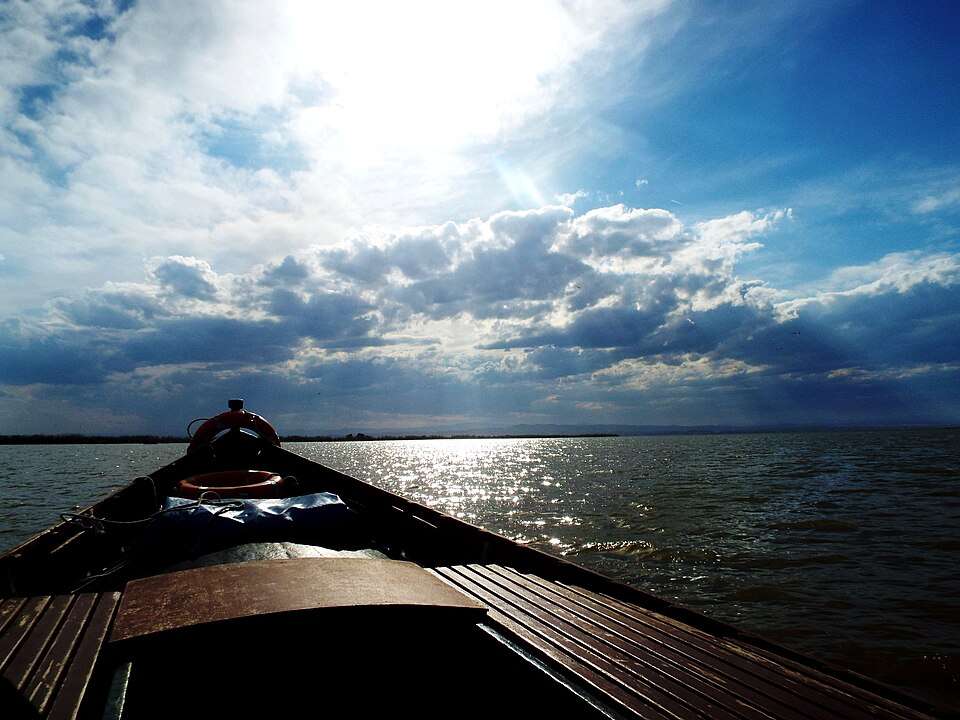
Albufera
Rice Fields, a Sunset Lagoon
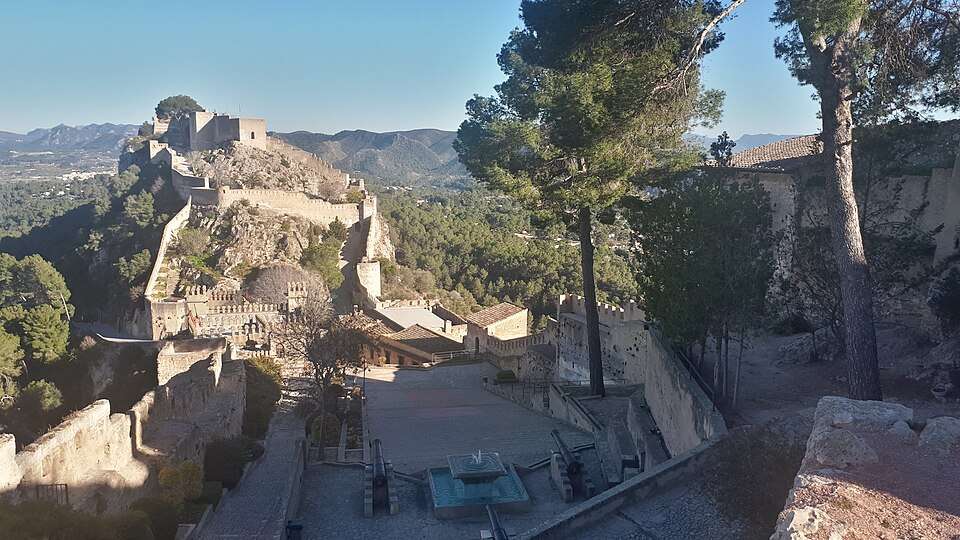
Xàtiva
The C2 Cercanías, the Castle on the Double Ridge

Sagunto
The Thirty-Minute Train, the Siege That Started a War
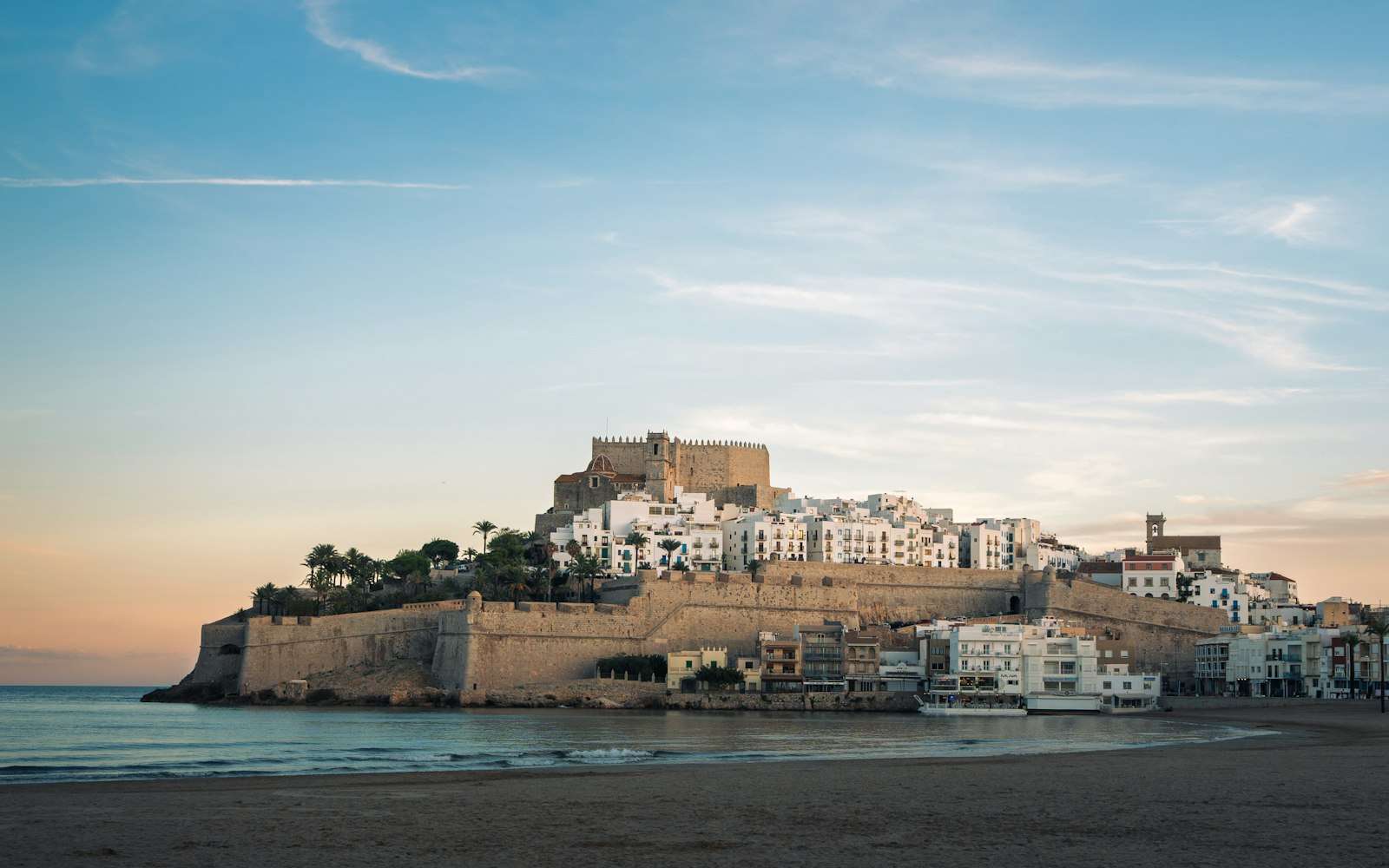
Peñíscola
A Castle in the Sea, the Pope Who Refused to Stop
The Albufera — Paella at the Source
The essential half day sits thirty minutes south. City buses 24 and 25 reach it — this is public-transit countryside. The Albufera is Spain’s largest lake, separated from the sea by a pine-covered sandbar and ringed by the rice paddies that produced Valencia’s dish.
The circuit: take a traditional flat-bottomed boat across the lagoon — small craft leave from El Palmar and the Gola de Pujol, and the sunset departures are famous for a reason. Walk the Devesa pinewoods between lake and sea. Then eat the lunch that is the point: paella valenciana in El Palmar, the village that codified it. That means rabbit, chicken, garrofó beans, and snails if you’re lucky. It does not mean mixing seafood and meat, and it never means chorizo. Eat it at lunch — rice at dinner marks the tourist.
One note: El Palmar’s restaurants range from shrine to assembly line. Book a recommended room — locals name Bon Aire and Nou Racó among the reliable — rather than drifting onto the first terrace.
Read the full Albufera day-trip page.
Sagunto & Xàtiva — The Two Castles
Two half days pair history with commuter trains.
Sagunto is thirty minutes north by cercanías. Hannibal’s siege of the hilltop in 219 BC helped start the Second Punic War; today a kilometer-long castle ridge runs above the town, with a restored Roman theater that still stages summer performances and a medieval Jewish quarter on the climb up.
Xàtiva is forty-five minutes south. Its double-crested castle is among Spain’s most spectacular — a saw-tooth of walls along the entire ridgeline above the town that produced two Borgia popes. In the local museum, the portrait of Felipe V, who burned the town in 1707, still hangs upside down — a 300-year grudge maintained with civic pride, and the best story you’ll take home. A tourist train runs up the hill and spares the summer climb.
Choose Sagunto for Rome, Xàtiva for the grander castle and the better lunch town.
Read the full Xàtiva day-trip page.
Read the full Sagunto day-trip page.
Peñíscola — The Pope’s Rock
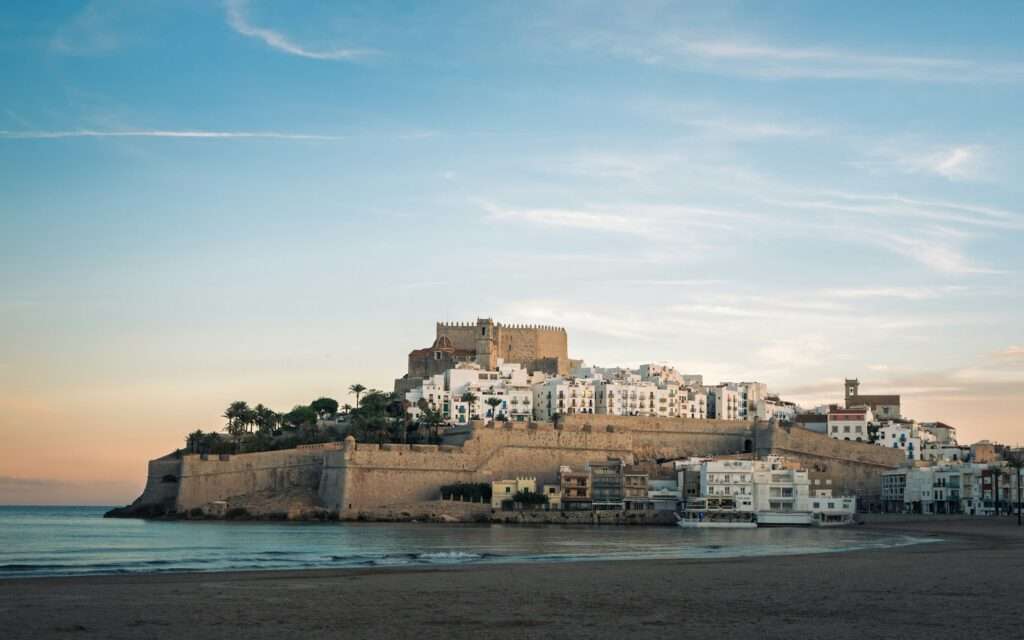
Ninety minutes north, Peñíscola is the postcard of Spain’s orange-blossom coast: a walled old town coiled around a rock peninsula with waves on three sides, crowned by the Templar castle where Benedict XIII — Papa Luna, the most stubborn of the Avignon-schism popes — held to his papacy against every deposition until his death. Locals tell his story with affection.
The visit: the castle and its sea ramparts, then the whitewashed lanes below — Game of Thrones filmed Meereen here, as the shops will remind you — and the beach that runs north from the walls for the swimming half of the day.
The calendar: August packs the town solid, while June, September, and the shoulder months return the lanes to walkable. The restaurants improve two streets off the main drag. It’s the best sea-plus-castle day on Spain’s east coast.
Read the full Peñíscola day-trip page.
Cuenca — The Hanging Houses by AVE
Here’s the rail surprise: Cuenca, seemingly deep in Castile, is under an hour from Valencia’s Joaquín Sorolla station by high-speed train, which turns one of Spain’s most dramatic towns into a comfortable day trip.
The old city rides a limestone spur between two gorges, and the Casas Colgadas — the hanging houses, their wooden balconies cantilevered over the void since the 15th century — are the emblem. Photograph them from the San Pablo footbridge; the crossing is the experience — expect mild vertigo. Then find the surprise: one of the houses holds the Museum of Spanish Abstract Art, an important collection in an improbable frame. Add the cathedral — begun in the 12th century, among Spain’s first Gothic — the gorge-rim walks, and a lunch of morteruelo if the day is cold.
Two logistics notes: the AVE stations sit outside both city centers, so budget the taxi or bus legs, and the last returns run early enough that you should check the timetable before lingering.
Requena & Montanejos — The Inland Pair
Two inland options; choose by appetite.
Requena, an hour west by train or tour, anchors the Utiel-Requena wine country. This is Bobal country — the burly local red in the middle of a rediscovery — plus traditional-method cavas that surprise drinkers who thought sparkling Spain ended in Catalonia. The town’s medieval Villa quarter sits over a honeycomb of excavated cellar-caves, and the guided cave circuit is the right spine for a visit. Bodega lunches complete it, with the who-drives-home rule in full force.
Montanejos, ninety minutes north in the Mijares gorge, is the swim: the Fuente de los Baños spring pours out at a constant 25°C into turquoise river pools under high cliffs. It’s busiest in high summer and startlingly pleasant in the shoulder months, when the water is warmer than the air. Tours run both; neither needs more than its day.
The City of Arts, the Market & Valencia Itself
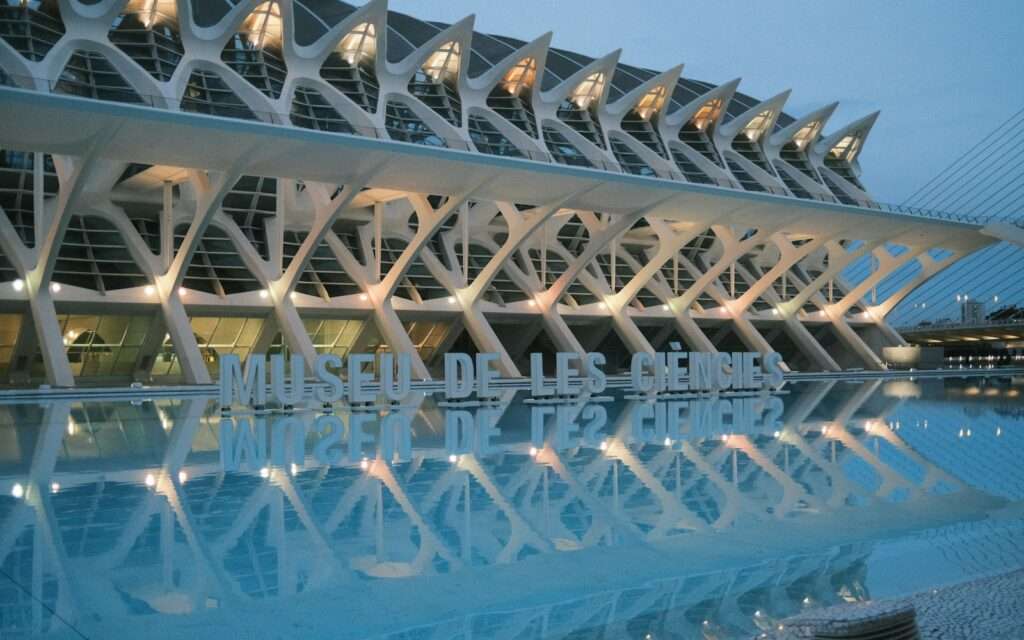
The City of Arts and Sciences — Calatrava’s white-boned complex in the old riverbed — is the skyline. The Oceanogràfic inside it is Europe’s largest aquarium and the ticket most worth its price; the architecture itself is free to wander and best at dusk, when the pools mirror the buildings.
The riverbed matters more than what’s built in it. The Turia Gardens run nine kilometers of park through the river’s diverted course, and biking them end to end explains Valencia’s quality of life in about an hour. The old town holds the Lonja de la Seda — the UNESCO-listed silk exchange with its famous twisted columns — the Central Market, one of Europe’s grandest working food halls (go hungry, mid-morning), and the cathedral’s Holy Grail chapel, whose claim is taken more seriously than visitors expect.
The rituals: horchata and fartons at a proper horchatería — Santa Catalina in town, or the pilgrimage to Alboraia where the tiger nuts grow. Agua de Valencia approached with respect: it drinks like juice and works like cava and vodka, because that’s what it is. And the paella rules, restated where they’re law — lunch only, valenciana or del senyoret, with the socarrat crust at the bottom treated as the prize.
Plan around Las Fallas, March 15–19: five days of satirical monuments, daily gunpowder mascletàs, and a final night when the city burns its own artworks. It’s one of Europe’s great festivals, and it’s also five days when Valencia is loud, packed, and booked solid. Attend deliberately or schedule around it — nothing in between works.
Frequently Asked Questions
Where should you eat paella in Valencia?
At lunch, never dinner, and ideally at the source — El Palmar in the Albufera, thirty minutes south. True paella valenciana means rabbit, chicken, and beans; seafood versions exist honorably, chorizo does not.
Is the Albufera worth a trip from Valencia?
Yes — the essential half day: a lagoon boat ride, the pinewoods, and paella where it was invented, all reachable by city bus. Sunset boat departures are the famous ones.
Can you visit Cuenca from Valencia?
Yes, under an hour by AVE — the hanging houses over the gorge, the San Pablo footbridge, and a first-rate abstract art museum make a dramatic, comfortable day. Both AVE stations sit outside the centers, so budget the connections.
What is special about Xàtiva castle?
A double castle running the whole ridgeline — among Spain’s most spectacular — above the Borgias’ hometown, which still hangs Felipe V’s portrait upside down in protest. Forty-five minutes by train.
When is Las Fallas and should you go?
March 15–19 — satirical monuments, daily explosions, and the final burning night. It’s magnificent and overwhelming: book far ahead and attend on purpose, or schedule your Valencia trip around it.