Sagunto by Train
Thirty minutes north, the hill town whose siege started the Second Punic War runs nearly a kilometer of free castle walls — and a Roman theatre whose modern restoration is as famous as it is argued about.
The short version
- The C-6 cercanías line runs Valencia to Sagunto in about thirty minutes at commuter fares and turn-up frequency (renfe.com), with the old town’s climb beginning fifteen minutes’ walk from the station.
- The history is the headline per the alarm: Saguntum’s eight-month resistance to Hannibal in 219 BC, and its fall, broke the Rome–Carthage treaty line and triggered the Second Punic War — the town’s siege is the war’s opening chapter in every ancient source.
- The castle ridge runs close to a kilometer of walls, gates, and plazas — Iberian, Roman, Moorish, and later works stacked along the crest — free to enter, lightly interpreted, and delivering the coast-to-mountains panorama that explains why everyone from Carthage onward wanted the hill.
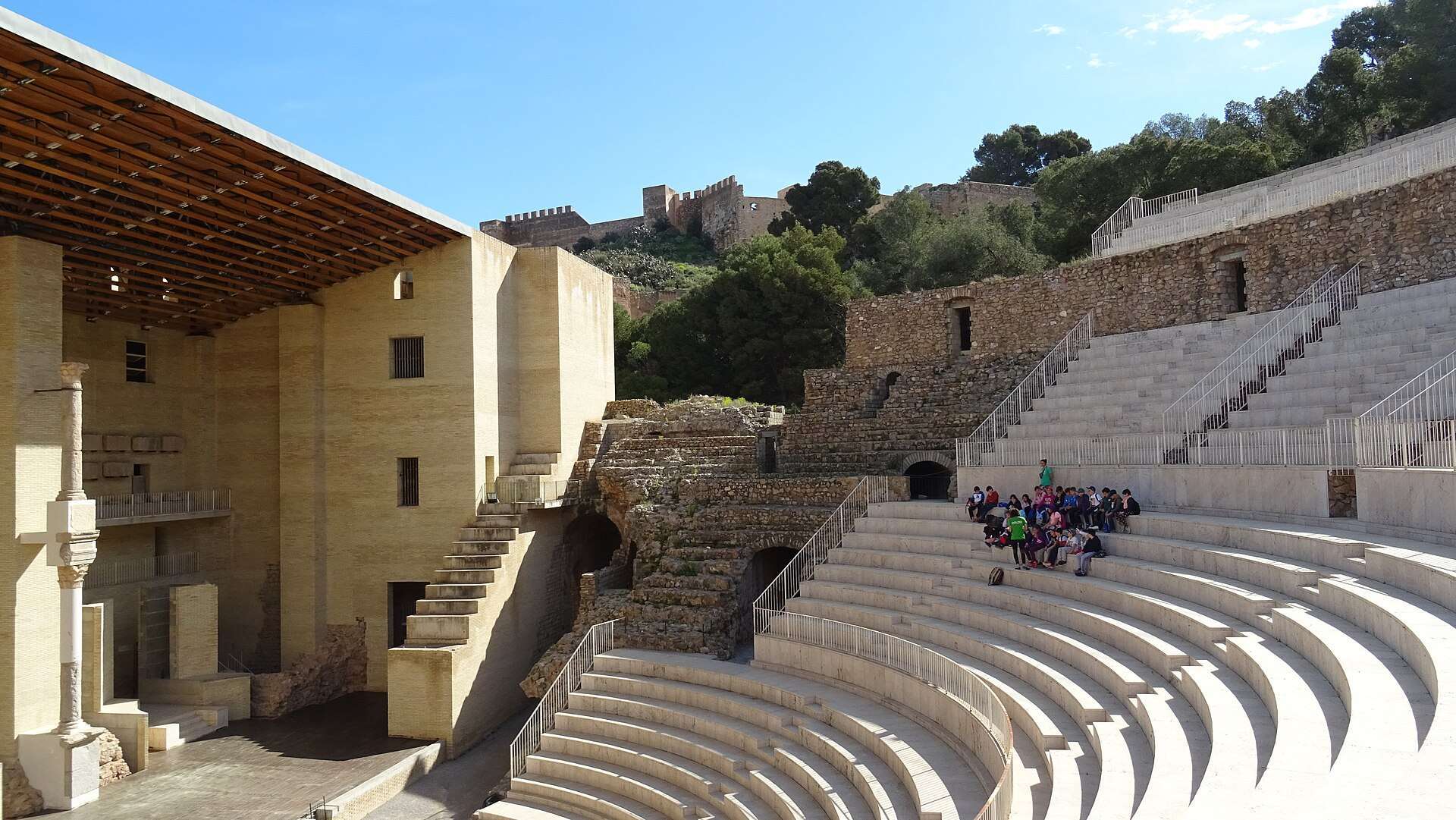
- The Roman theatre’s restoration is stated per the alarm as the working argument it is: the 1990s intervention set modern stage architecture into the ancient cavea — nationally famous, litigated, and debated ever since — and the result functions as a live venue whose summer festival (Sagunt a Escena) fills the ancient seats.
- The old town beneath adds the jueria — the medieval Jewish quarter’s portal and lanes — the Plaza Mayor’s arcades, and a compact museum tier covering the Iberian-to-Roman finds.
- The modern lower town and port district run the industrial-heritage postscript for the curious: the blast-furnace monument of the old steelworks, a different century’s ambition on the same coastal plain.

Getting there
The cercanías removes all planning — frequent trains, half an hour, validate and ride. The climb from the old town to the ridge is the day’s real transport: steady uphill lanes, then the castle’s long spine, with water and sun cover as the ticket price in every warm month. The theatre sits on the slope between town and castle, taken naturally on the way up or down; festival evenings (summer) invert the day around a booked performance in the ancient shell.
The day
Old town first at street level: the Plaza Mayor’s arcades, the jueria’s portal and its quiet lanes, and the museum’s orientation for the layers you’re about to climb through. The theatre takes its hour on the ascent — the ancient cavea’s geometry, the modern intervention read with your own eyes per the alarm’s have-the-argument framing, and the stage that hosts real seasons. Then the ridge: the castle’s near-kilometer walked end to end — the Plaza de Armas’ Roman forum traces, the Moorish cisterns, the artillery-era bastions — with the panorama running from the Mediterranean’s glitter to the sierra’s wall. Two unhurried hours cover it per the alarm’s budget. The descent lands you at a terrace for the late lunch the climb bought, and the half-hour train home leaves the argument about the theatre exactly where the alarm scheduled it.
When to go
October through May runs the climb at walking temperature with winter’s clearest coast-to-mountain visibility. Summer enforces the morning rule on the shadeless ridge and pays it back with Sagunt a Escena — the theatre’s festival season, when the argued-about restoration does its actual job under stage lights. Spring greens the castle’s slopes and wildflowers the wall lines. Any season, the midweek visit gets the kilometer of ramparts nearly to itself, which is this trip’s quiet luxury.
Frequently Asked Questions
What exactly happened in 219 BC?
Hannibal besieged Saguntum — a town aligned with Rome — for eight months; its fall, and Rome’s response, opened the Second Punic War, the conflict that would carry Hannibal over the Alps. The ancient historians treat the siege as the war’s trigger, and the town has carried the credential for twenty-two centuries.
Why is the theatre restoration controversial?
The 1990s project by Grassi and Portaceli rebuilt the theatre as a functioning venue — modern stone and stage architecture set into the Roman remains — and the intervention was fought in courts and criticism for years (a demolition order was issued and never executed). Supporters point to a working theatre; critics to lost authenticity. The alarm’s framing stands: see it, use it, argue after.
Is the castle climb hard?
A steady twenty-to-thirty-minute ascent from the old town on lanes and paths, then flat-to-rolling walking along the ridge itself. Ordinary shoes and ordinary legs cover it; summer heat is the only real gatekeeper. The free entry and light crowds make it among the best effort-to-reward ratios on the Valencian coast.
Is there anything to the industrial port area?
For industrial-heritage tastes, the Puerto de Sagunto district preserves its blast furnace as a monument to the steelworks century — a striking counterpoint to the hill’s antiquity, reachable by local bus or a short drive. Most day-trippers skip it without loss; enthusiasts find it the bonus track.
Sagunto or Xàtiva from Valencia?
Xàtiva (documented on this network) for the double-castle ridge and Borgia history south of the city; Sagunto for Punic War weight and the theatre argument north of it. Two hilltop fortress days in opposite directions at the same train cost — history buffs split by era, and the full Valencia week takes both.