Xàtiva from Valencia
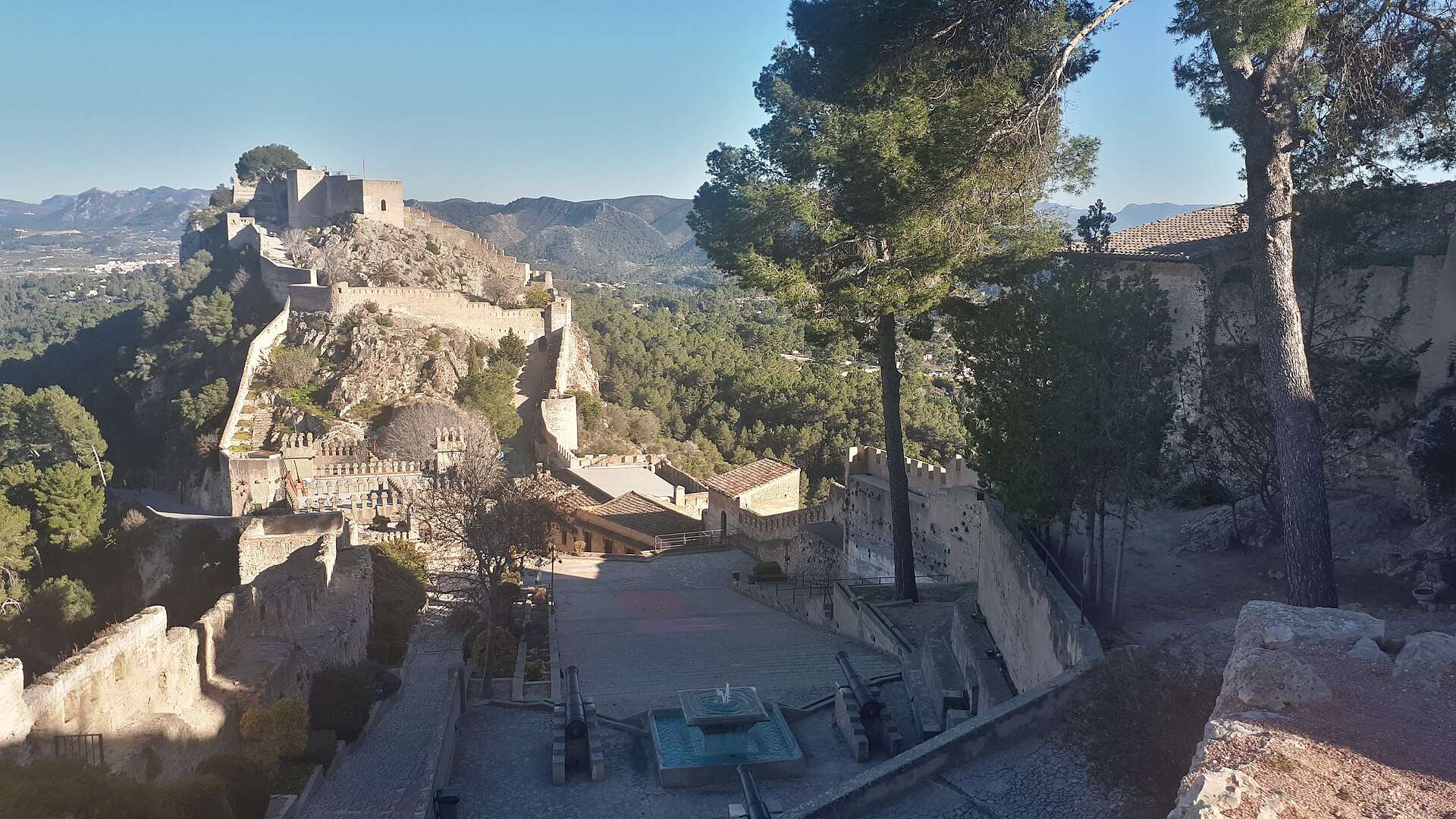
A castle stretched along a double ridge above the town that gave the world the Borgias — and that hangs a king’s portrait upside down for burning it. The commuter train from Valencia does it in 50 minutes.
The short version
- Cercanías line C2 runs from Valencia Nord to Xàtiva in about 50 minutes at commuter fares, no booking; times at renfe.com.
- The castle runs the length of a double ridge above town — Castell Menor on the Iberian-Roman end, Castell Major on the medieval one — with walls, gates, and cisterns strung between summits; entry costs a few euros.
- The views from the upper gates stack the huerta, the sierra, and the town’s roofs into the province’s best panorama.
- Xàtiva fathered the Borgias: both Borgia popes — Calixtus III and Alexander VI — were born here, and the collegiate basilica and old-town palaces carry the family’s traces.
- The L’Almodí museum hangs its portrait of Felipe V upside down — the town’s standing reply to the king who burned it in 1707 and renamed it in punishment. The gesture is official, permanent, and explained with relish.
- The old town below repays the descent: the Plaça del Mercat’s arcades, Gothic fountains, and the basilica’s scale ambitions.

Getting there
The C2 cercanías from Valencia Nord is commuter transport doing tourist work: regular departures, small fares, 50 minutes through orange country. Xàtiva’s station sits at the foot of the old town, with the castle ridge visibly organizing everything above. The tourist road-train shuttles from the center up the castle hill on its posted schedule — the alarm’s up-by-wheels, down-by-foot plan uses it correctly. Drivers can reach the castle gate directly, which surrenders half the town.
The day
Ascend early by whichever means, and take the ridge west to east: the Menor’s older stones and the Major’s medieval works, the chapel where a rival pope was imprisoned, and the walls’ long saddle between summits with the drop on both sides. Two hours up top is honest; carry water always. Descend through the pine switchbacks into the old town for a long Valencian lunch — arroz al horno was allegedly perfected here, and the town defends the claim at the table. The afternoon covers the basilica, the upside-down king at L’Almodí (the museum’s other floors are solid too), and the fountain-studded lanes at siesta pace before an easy evening train.
When to go
October through May is the climbing season — the ridge is exposed, and Xàtiva’s summer heat is provincial legend (the town regularly posts Spain’s highest readings). In July and August the alarm’s first-thing rule becomes survival advice, and the tourist train justifies its fare. Spring greens the huerta below the walls; the Fira d’Agost in mid-August fills the town with its centuries-old fair for those choosing the heat deliberately. Mondays close the castle, per the alarm — the town alone doesn’t quite carry the trip.
Frequently Asked Questions
Is the castle climb worth it?
The ridge is the point — a fortress stretched across two summits with the province laid out below. It’s the best castle-for-effort trade on Valencia’s map, and the effort is real but ordinary.
What’s the actual Borgia connection?
Rodrigo Borgia — Pope Alexander VI, the dynasty’s engine — was born here in 1431, following his uncle Calixtus III. The town wears the name with more pride than the family’s reputation strictly merits, which is its own kind of honesty.
Why is the portrait upside down?
Felipe V burned Xàtiva in 1707 for backing his rival in the succession war, then renamed it. The town got its name back, hung his portrait inverted, and has declined every suggestion to right it since. It’s the best museum label in Spain.
Xàtiva or Sagunto from Valencia?
Sagunto for Roman theater and shorter logistics; Xàtiva for the bigger castle, the better town, and the stronger story. Given one pick, Xàtiva by a length.
What should I eat?
Arroz al horno — oven-baked rice with morcilla and chickpeas — in its claimed hometown, followed by anything citrus. The lunch is half the reason the climb schedule runs morning-first.